








Buying a smartphone today isn't as simple as picking the latest model on the shelf. With hundreds of options available across different price ranges, brands, and feature sets, finding the right phone can quickly become overwhelming.
Some smartphones focus on photography, while others are designed for gaming. Certain models promise all-day battery life, and some highlight AI-powered features, premium displays, or lightning-fast charging. While these features sound impressive, not every smartphone is built for every user.
The good news is that you don't need the most expensive smartphone to enjoy a great experience. What matters is choosing a device that fits your lifestyle, daily habits, and budget.
Whether you're a student attending online classes, a professional managing work on the move, a content creator capturing videos, or simply someone looking for a reliable phone for everyday use, this guide will help you understand what to look for before making your purchase.
Start With Your Daily Needs
Before comparing specifications and prices, take a moment to think about how you use your phone every day.
Do you spend hours scrolling through social media? Are you constantly attending video meetings? Do you enjoy mobile gaming? Or are you someone who mainly uses a smartphone for calls, messaging, and occasional browsing?
Your answers will help narrow down your choices significantly.
For example, a college student may prioritise battery life, storage, and affordability. A working professional may need strong performance and seamless multitasking. Someone who enjoys photography will naturally pay more attention to camera quality, while gamers often look for powerful processors and smoother displays.
When you understand your requirements first, choosing a smartphone becomes much easier.
https://www.sathya.store/category/mobiles

Decide Your Budget Before You Start Shopping
One of the most common mistakes buyers make is falling in love with a phone before deciding on a budget.
While premium smartphones offer impressive features, many users never fully utilise everything they pay for. On the other hand, budget and mid-range smartphones have improved tremendously over the past few years and now deliver excellent value for money.
Smartphones Under ₹15,000
If you're looking for a reliable device for everyday tasks, this category offers plenty of options.
These phones are typically suitable for:
Calling and messaging
Online classes
Social media
Video streaming
Light gaming
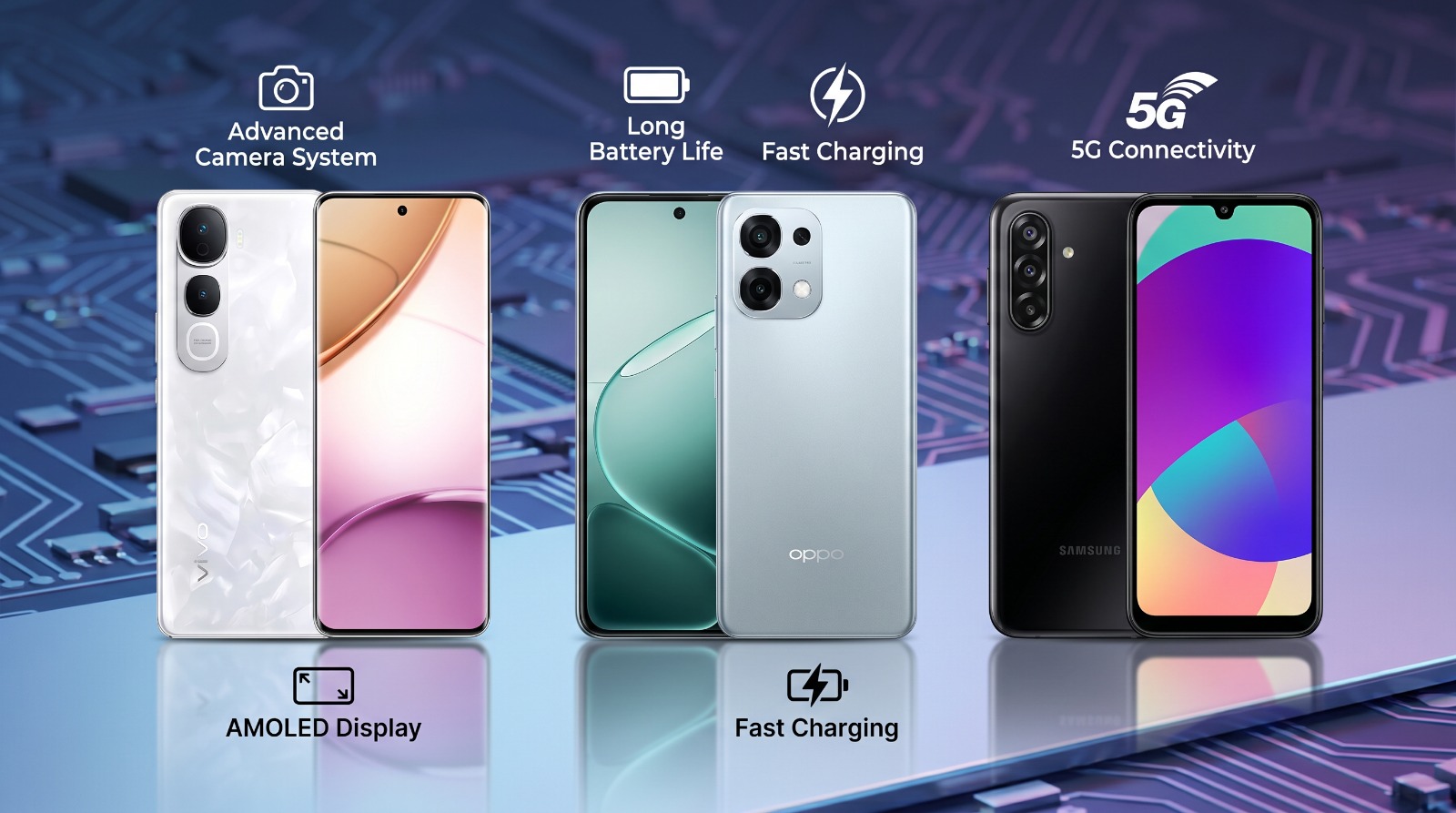
Many smartphones in this segment now include large displays, long-lasting batteries, and even 5G connectivity.
Smartphones Between ₹15,000 and ₹30,000
This is often considered the sweet spot for most Indian buyers.
In this range, you can expect:
Better camera performance
Faster processors
AMOLED displays
Enhanced gaming capabilities
Faster charging speeds
For many users, this category offers the perfect balance between features and affordability.
Smartphones Above ₹30,000
Premium smartphones are designed for users who want top-tier performance and advanced features.
These devices often include:
Flagship processors
Professional-grade cameras
Premium build quality
Advanced AI features
Longer software support
If your smartphone plays a major role in work, content creation, or entertainment, investing in a premium model can be worthwhile.
Don't Ignore the Display
Think about how many times you look at your smartphone screen every day. Whether you're watching videos, reading messages, shopping online, or browsing social media, the display affects almost every interaction.
Many modern smartphones feature AMOLED displays, which are known for vibrant colours, deeper blacks, and excellent contrast. They make videos look richer and improve the overall viewing experience.
Another feature worth considering is the refresh rate. A 90Hz or 120Hz display makes scrolling feel noticeably smoother compared to traditional screens. Once you experience it, it's difficult to go back.
If you spend a lot of time on your phone, investing in a good display can make a bigger difference than you might expect.
How Much RAM Do You Actually Need?
RAM is one of the most talked-about smartphone specifications, but many buyers aren't sure how much they really need.
If your usage mainly involves calling, browsing, messaging, and social media, a smartphone with 6GB RAM is usually more than sufficient.
However, if you're frequently switching between multiple apps, editing videos, playing games, or using productivity tools, you may benefit from 8GB RAM or more.
For most users, the goal shouldn't be to buy the highest RAM available. Instead, choose a configuration that matches your daily usage.
Choosing the Right Storage Capacity
Storage is often something people only think about after their phone starts showing the dreaded "Storage Full" notification.
Photos, videos, apps, and documents consume space faster than many people realise.
A smartphone with 128GB storage is generally enough for most users. However, if you regularly record videos, download movies, or create content, 256GB storage can provide extra peace of mind.
It's always better to have slightly more storage than you currently need rather than running out of space a year later.
Understanding Smartphone Cameras
Many people assume that more megapixels automatically mean better photos. In reality, camera performance depends on several factors working together.
A good camera system combines quality sensors, image processing software, stabilisation technology, and intelligent photography features.
When evaluating a smartphone camera, consider:
Photo quality in daylight
Low-light performance
Video recording capabilities
Front camera quality
Optical Image Stabilisation (OIS)
If photography is important to you, don't focus solely on numbers. Real-world image quality matters far more.
https://www.sathya.store/category/mobiles
Battery Life Can Make or Break Your Experience
Few things are more frustrating than watching your battery percentage drop rapidly during the day.
Fortunately, modern smartphones are far more efficient than older models.
Most smartphones now come with batteries ranging from 5000mAh to 6000mAh, which is generally enough for a full day of use.
Fast charging has also become a game changer. Instead of waiting hours for a full charge, many devices can now deliver several hours of usage after just a short charging session.
For users who travel frequently or spend long hours away from charging points, battery performance should be one of the top priorities.
Why 5G Is Worth Considering
Even if you're currently using a 4G network, purchasing a 5G smartphone makes practical sense today.
As 5G coverage continues to expand across India, more users are experiencing faster download speeds, smoother streaming, and improved connectivity.
Choosing a 5G-enabled device helps ensure that your smartphone remains relevant and capable for years to come.
Common Smartphone Buying Mistakes to Avoid
When shopping for a new smartphone, it's easy to get distracted by marketing terms and flashy advertisements.
Here are a few mistakes worth avoiding:
Buying a phone only because it has a high megapixel camera
Ignoring battery life
Choosing insufficient storage
Overspending on features you'll rarely use
Focusing only on specifications instead of real-world performance
Forgetting to check software update support
A balanced smartphone often delivers a better experience than one that excels in just one area.
Final Thoughts
The best smartphone isn't necessarily the most expensive one or the model with the longest specification sheet. It's the device that fits naturally into your everyday life.
Before making a purchase, think about how you use your smartphone, what features matter most to you, and how long you plan to keep the device. By understanding your priorities and comparing options carefully, you can make a confident decision and get the best value for your money.
A smartphone is something you'll use every day, so it's worth taking a little extra time to choose the right one.